How to Coat Pre-Rolls with Kief: A Step-by-Step Guide
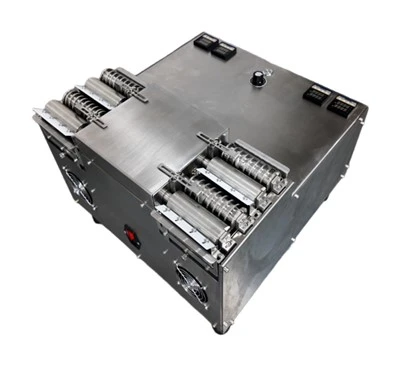
Kief-dusted pre-rolls are the most approachable entry point into the infused category. They look premium, smoke clean, and add real margin without reformulating your flower. But the difference between a joint that stays frosted in the jar and one that sheds powder on the shelf comes down to a single rule. Learning how to coat pre rolls with kief correctly always starts with gluing first. This guide walks the full process - from prep to packaging - using a preroll glue coater and a pre roll kief coater as the paired system that makes the result repeatable instead of lucky.
Why Kief Coating Starts with Glue
A dry cone has nothing for kief to grab. If you tumble a plain pre-roll in a bed of kief, a little dust sticks from static and friction, but most of it falls off the moment the lid closes. The fix is a primer layer: a thin, even film of food-grade adhesive that gives the kief something to bond to. That primer is applied by a preroll glue coater before the joint ever reaches the dusting drum.
So the sequence is non-negotiable: preroll glue coater first, pre roll kief coater second. Get that order right and the rest is process control. Get it wrong and no amount of premium kief will save the finished product.
What You Need Before You Start
Gather your inputs and equipment before running a batch so the line never stalls mid-run:
Finished pre-rolls - cones, straights, or blunts, packed and stable. Let them rest so the flower inside isn't still settling.
Food-grade adhesive - typically a gum arabic solution; distillate if you also want potency in the coat.
Kief - sifted, dry, free of stems and clumps. Grade matters: finer, cleaner kief coats more evenly.
A preroll glue coater - to lay the primer film at a controlled, repeatable coat weight.
A pre roll kief coater (kief tumbler / dusting drum) - to apply the dust while the primer is still tacky.
Clean tubs and tubes for cure and packaging, ideally child-resistant where required.
Step 1 - Prep the Pre-Rolls and the Adhesive
Start with stable pre-rolls. If the flower inside is still settling, the cone can deform as it rotates, leaving an uneven surface for the primer. Let packs rest a short cure period after filling, and keep them at a stable humidity so the wrap doesn't go brittle or soft.
Prepare the adhesive to working spec. Gum arabic should be at the viscosity your preroll glue coater is tuned for - usually a thin, pourable solution. If you are using distillate, bring the reservoir into its pourable temperature window first; cold distillate will not transfer evenly. The single biggest cause of a failed run is an adhesive that is the wrong temperature before the primer stage even begins. Run a single test joint before committing the batch.
Step 2 - Prime with the Preroll Glue Coater
Load the pre-rolls into the holder bank of the preroll glue coater and run them through. The machine deposits a controlled film across the cone surface - shoulder to tip, with no bare band at the crutch. This is the "glue first" step, and it is the one operators are tempted to skip when they are in a hurry. Don't.
A good primer is nearly invisible: uniform sheen, no glossy pooling at the crown, no dry streaks. Because the preroll glue coater meters the adhesive, every joint gets the same coat weight, which is what lets the next step produce consistent results batch after batch. Dial speed and temperature together - slower pass and correct viscosity give a slightly heavier film, while a faster pass gives a lighter one - and lock the setting once you hit your target.
Step 3 - Dust in the Pre Roll Kief Coater
Move the still-tacky joints directly into the pre roll kief coater. Timing matters: the primer has an open "tack window," and you want the dusting to happen while it is still sticky. Tumbling in the kief bed lets the dust adhere to the primer film and grip through packaging and transit.
The pre roll kief coater should sit adjacent to the preroll glue coater on the line so the tack window never closes between steps. Distance is the enemy of a good bond - a joint that waits too long before dusting ends up patchy no matter how good your kief is. Use a kief grade appropriate to your SKU, and avoid over-dusting; more dust does not equal a better joint, just a messier one.
Step 4 - Cure and Package
After dusting, let the coated pre-rolls set so the primer fully grabs the kief. A short rest at ambient conditions is usually enough; avoid stacking or boxing while the surface is still tacky or you will lose dust to contact surfaces. A quick visual QC pass catches any joint that missed the primer and came out bare.
Package in tubes or the format your SKU uses, ideally with a tamper-evident, child-resistant closure where required. Because the kief is bonded to a primer rather than resting on the wrap, the finished joint stays frosted from shelf to sale - which is the whole point of doing it right.
Common Mistakes to Avoid
1 Skipping the glue. Dusting a dry cone is the #1 failure; the kief just falls off.
2 Wrong adhesive temperature. Too cold = lumpy, too hot = drip. Hold the working window.
3 Waiting too long between steps. Let the tack window close and the bond fails.
4 Over-dusting. A heavy kief coat looks messy, slows the burn, and wastes product.
5 Poor kief grade. Stems and clumps create bare spots and uneven appearance.
FAQ
1 What glue do you use for kief pre-rolls? Food-grade gum arabic is the standard primer - safe, cheap, odorless, and enough tack to hold kief. Switch to distillate only if you also want potency and sheen in the coat. (Full adhesive breakdown in [ Arabic Gum vs Distillate].)
2 How much kief sticks per joint? It depends on coat weight and kief grade, but because a preroll glue coater standardizes the primer, uptake is consistent run to run. Weigh a few finished units to dial in your target.
3 Can you coat kief by hand instead of machines? You can, but pre roll kief coater vs hand dusting is not a fair fight: hand methods are slow, uneven, and waste kief. Automated dusting pays off the moment volume climbs.
4 Why does glue have to come before kief? Because a dry cone has nothing for kief to bond to. Glue first creates the tack; kief second locks it in. Reversing the order gives you a joint that sheds powder in the jar.
5 How should finished kief pre-rolls be stored? Keep them in a stable, dry environment in sealed packaging. Bonded kief is robust, but moisture and friction still degrade appearance over time.
6 Will coat weight stay consistent across batches? Yes - that is the core advantage of a preroll glue coater. Once the setting is locked, coat weight holds run to run, which is exactly what hand-brushing cannot deliver.
Related & Next Steps
The glue-first method only works when the two machines are specified as a system. Review the paired hardware on the Pre Roll Kief Coater , compare external vs internal infusion in [Glue Coater vs Infusion Machine], or go back to the [Preroll Glue Coater ] Preroll Glue Coater main guide for the full workflow. Ready to spec a line? [contact us] Request a quote.