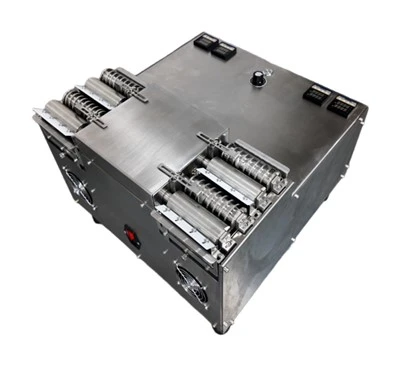
Preroll Glue Coater vs Infusion Machine: External vs Internal Infusion
When brands talk about "infused pre-rolls," they usually mean one of two very different things. One approach coats the outside of the joint with kief or concentrate - external infusion. The other packs a pocket of hash or rosin inside the cone - internal infusion, aka the "hash hole" or "donut." If you are evaluating a pre roll external infusion machine, you are in the first camp, and the workhorse behind it is the preroll glue coater. This guide contrasts the two methods and shows exactly when external infusion is the smarter build.
Two Infusion Methods, Two Different Machines
Internal infusion (donut / hash hole). A concentrated plug - often hash or rosin - is seated inside the cone, usually near the midpoint, so it melts and "blooms" during the smoke. This requires a separate insertion or deposit machine and careful packing so the core stays put. The visual is subtle; the payoff is in the burn and potency.
External infusion (kief-coated). The finished infused pre-roll gets a tacky primer from a preroll glue coater, then rolls through a kief bed so the outside is frosted with dust or hash. The visual is immediate and premium, and the process is simpler and faster to scale.
The key distinction for buyers: a pre roll external infusion machine and an internal-infusion deposit machine are not the same capital purchase. Know which effect you are selling before you spec the line.
What Is External Infusion, Exactly?
External infusion is any process that adds potency or appearance to the outside of a pre-roll. The most common form is kief dusting, but brands also coat with distillate, crushed hash, or sugar-leaf resin. Every version shares one requirement: a tacky surface for the additive to grab. That is the job of the preroll glue coater - it lays the primer that makes external infusion possible.
So when someone searches "pre roll external infusion machine," what they usually need is a glue-coating-plus-dusting system, not a core-injection rig. Matching the machine to the method avoids buying the wrong capability and protects your budget.
What Is Internal Infusion (and Why It Needs Different Gear)?
Internal infusion is built into the joint itself. A "hash hole" is a cavity packed with concentrate; a "donut" is a ring of extract around the midpoint. These formats demand precision: the core must be centered, stable, and packed so it doesn't migrate during handling or burn unevenly. That takes a deposit or insertion machine, often with vision alignment, plus tight cooperation with the cone-filling step upstream.
The result is a different product story - a melt-and-bloom experience prized by connoisseurs - but at lower throughput and higher concentrate cost per unit. It is a premium play, not a volume play, which is the opposite profile from external infusion.
When to Use a Preroll Glue Coater (External)
Choose external infusion via a preroll glue coater when:
Appearance sells the SKU. A frosted, crystal-coated cone photographs better and signals premium on a menu.
You want speed and throughput. Coating and dusting are continuous, high-unit-rate processes compared with placing individual internal cores.
You run many SKUs. Swap the dust (kief, hash, distillate) without re-engineering the joint itself.
Margin matters more than maximum potency per unit. External kief adds aroma and a potency bump at low material cost.
External infusion is the volume play. It is how most commercial infused pre-roll brands scale a good-looking, consistent product.
When Internal Infusion Wins Instead
Choose internal infusion when your brand is built on maximum potency and a signature melt experience, and you can support the higher concentrate cost and slower line. Many established brands run both: an external line for volume SKUs and an internal line for a hero connoisseur product. They are complementary, not competing.
Cost & Output Comparison
|
Factor |
External (preroll glue coater + kief coater) |
Internal (hash hole deposit) |
|
Equipment complexity |
Lower; two paired stations |
Higher; precise core placement |
|
Throughput |
High, continuous |
Lower per operator |
|
Material cost per unit |
Low (grams of dust) |
Higher (concentrate plug) |
|
Visual impact |
High (frosted look) |
Subtle (hidden core) |
|
Burn signature |
Standard, slightly slower if over-dusted |
Melt-and-bloom experience |
|
Best for |
Volume SKUs, menu appeal |
Connoisseur potency plays |
The takeaway: a pre roll external infusion machine built around a preroll glue coater delivers the best combination of output and appearance for most brands, while internal infusion carves out a premium, potency-led niche.
Brand Strategy: Which to Launch First?
If you are a new or scaling brand, external infusion is almost always the right first move. It needs less capital, scales faster, and gives you a shelf-ready premium look that drives trial. Once you have volume and a loyal base, an internal "hash hole" hero SKU can deepen the line without disrupting your core throughput. The preroll glue coater is the foundation of that growth path.
Combining Both for a Complete Portfolio
The smartest operators don't pick one method - they run a preroll glue coater line for volume and add a separate internal-deposit cell for a connoisseur hero product. The external line carries the brand's everyday margin and shelf presence; the internal line earns press, loyalty, and a higher price point. Because the two processes use different machines, they can scale independently: you expand the glue-coating throughput as volume grows without touching the slower, craft-intensive internal cell. Planning for both from day one - even if you only launch external first - keeps your later expansion a matter of adding a cell, not re-architecting the floor.
FAQ
Pre roll external infusion machine vs internal - which should I buy? Buy external (preroll glue coater + kief coater) for volume and shelf appeal; buy internal deposition if your brand is built on maximum potency and a "melt" experience. Many brands run both.
Can one machine do both? Not really. External needs a primer-and-dust system; internal needs a core depositor. They are complementary lines, not one machine.
Does external infusion change the burn? A properly primed, lightly dusted joint burns clean. Over-glue or heavy dust can slow the burn, which is why coat-weight control on the preroll glue coater matters.
Is external infusion cheaper to produce? Generally yes - kief is far cheaper per unit of effect than a concentrate core, and the process scales faster.
Related & Next Steps
See the hardware on the [Preroll Glue Coater product] , learn the glue-first method in [ How to Coat Pre-Rolls with Kief], or return to the [ Preroll Glue Coater ]Preroll Glue Coater main guide for the full comparison. Specifying a line? [contact us] Request a quote.